
Product photography ideas can completely change how your brand is seen online. Did you know that 75% of online shoppers rely on product photos when making a purchase decision? And yet, so many small business owners are still posting blurry, poorly lit images and wondering why their conversion rates are low.
I get it. You do not have a big studio or a massive budget. But the truth is that you do not need one. With the right creative product photography ideas, a smartphone, and a few simple tools, you can take photos that look just as good as the big brands. This guide will walk you through exactly how to do that.
Why Product Photography Matters for Small Businesses
Before we jump into the ideas, let me give you some perspective. The global Product Photography Services Market is projected to grow from USD 0.96 billion in 2026 to USD 3.32 billion by 2035, growing at a CAGR of 11.1%. That tells you one thing: visual content is a serious business driver right now.
For small businesses, great photos do more than just look nice. They build trust, increase clicks, and directly impact sales. When your ecommerce product photo ideas are done right, customers feel confident buying from you without ever touching the product.
Setting Up Your DIY Product Photography Studio
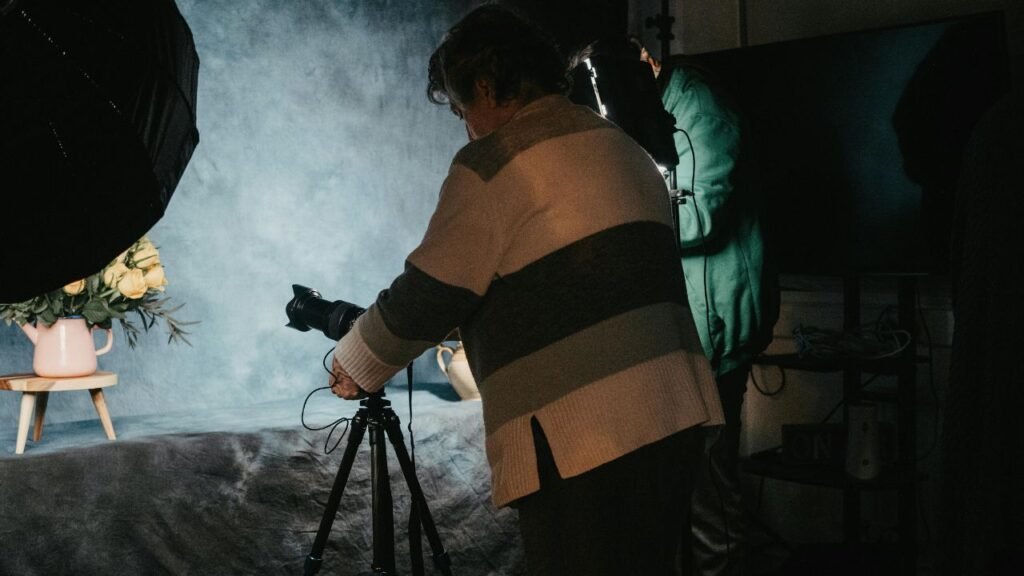
You do not need a fancy studio. A table near a window, a white foam board, and a lamp can get you surprisingly far. Here is what a basic DIY product photography setup looks like:
- A white or neutral backdrop (foam board, paper roll, or fabric)
- A window or a softbox for natural diffused light
- A white cardboard reflector to fill in shadows
- A tripod to keep your shots steady and consistent
- Your smartphone or a DSLR camera
For clean ecommerce product photography, set your white balance correctly so your background stays true white on screen. Shoot at ISO 100 to keep your images sharp and noise-free, and use an aperture around f/8 so the entire product stays in focus.
If you want to take your background game further, check out these product photography backdrop ideas and DIY photography backdrop ideas for low-cost, high-impact options you can make at home.
Best Product Photography Ideas to Try
1. Clean White Background Shots
This is the gold standard for e-commerce product photo ideas. A pure white background keeps the focus entirely on your product. It looks professional and clean, and works perfectly for marketplaces like Amazon and Shopify.
All you need is a white foam board and a single light source. Bounce extra light from the opposite side using another piece of white cardboard.
2. Flat Lay Photography
Flat lay product photography is incredibly popular for lifestyle brands, food, skincare, and accessories. You shoot straight down from above, arranging products alongside complementary props.
Start with a clean, neutral surface. Use natural light from a nearby window. Arrange items with intention, and leave some breathing room in the frame. The rule of thirds applies here, too: do not center everything perfectly, as a slightly off-center composition tends to look more natural and editorial.
Want more background inspiration? Explore these photography background ideas to find surfaces and textures that match your brand aesthetic.
3. Lifestyle Product Photography
Lifestyle product photography shows your product being used in real life. This style builds an emotional connection with your customer. Instead of showing a bottle of lotion on a white background, you show a person applying it after a morning shower.
This type of shot works exceptionally well for fashion, beauty, home goods, and fitness products. It tells a story. And stories sell.
4. Macro Product Photography
Macro product photography ideas are perfect for products where texture and detail matter. Think fabric stitching, watch dials, skincare ingredients, or jewelry. A close-up macro shot communicates quality in a way that wide shots simply cannot.
If you sell jewelry, you already know that detail shots are non-negotiable. Take a look at these jewellery product photography ideas specifically crafted to highlight the finest details of your pieces.
5. Colored and Gradient Backgrounds
Move beyond plain white. Colored backgrounds, gradients, and bold contrasting tones can make your product pop on social media. This works especially well for skincare, candles, and packaged goods.
Match the background color to your brand palette for a cohesive look. A soft pastel works well for natural beauty brands, while a bold color makes tech and food products feel energetic and modern.
6. Prop Styling
Props add context and personality to your shots. A bottle of olive oil photographed beside fresh herbs and rustic wood creates a sensory story. The viewer almost smells it.
Keep your props relevant and minimal. One or two supporting items are enough. Too many props make the image feel cluttered, and your product gets lost.
7. Reflective Surface Shots
Place your product on a reflective surface like a mirror, black acrylic tile, or even a phone screen. The reflection creates depth and a high-end, editorial feel. This technique is simple but visually striking.
8. Texture and Material Shots
Shoot products against interesting textures like linen, marble, wood, or concrete. These backgrounds make your product feel more premium. Pair a candle with a raw wood surface. Place a coffee mug on a concrete countertop.
This technique works especially well for product photoshoot inspiration in the home, food, and wellness spaces.
9. Floating or Levitation Shots
This one requires a little editing, but it is worth it. Tie your product with a thin thread that matches the background color and hang it in mid-air. In post-processing, remove the string. The result looks like the product is floating, which immediately grabs attention.
10. In-Context or Packaging Shots
Show the full brand experience. Photograph your product inside its packaging, unwrapping it, or next to your brand materials like tissue paper, stickers, and thank-you cards. This builds perceived value and works incredibly well for unboxing content.
Product Photography Lighting Techniques That Actually Work
Product photography lighting techniques are arguably the most important skill you can develop. Here is a simple setup that works for most products:
- Position one main softbox or window light at a 45-degree angle from the product
- Place a white reflector card on the opposite side to fill in harsh shadows
- Add a backlight or a second light source if shooting transparent or glass products
- Keep your light source consistent across all your shots in a session
Natural window light is free and incredibly beautiful for lifestyle and soft product shots. For hard-edged, commercial ecommerce images, a studio strobe gives you more control.
Niche Product Photography Ideas Worth Exploring
Different product categories call for different approaches. Here are a few specific directions to explore:
Shoes: Footwear needs clean angles, side shots, and detail shots of the sole and material. Check out these shoe photography ideas to learn how to make every pair look ready for a catalog.
Cakes and food: Colors should pop, textures should look mouthwatering, and lighting should feel warm and inviting. These cake photoshoot ideas will help you make every slice look irresistible.
Cars: Wide angles, dramatic lighting, and location shoots work best for automotive photography. Explore these car photography ideas for inspiration.
Pet products: Showing pets using your products adds instant charm and emotional appeal. Browse dog photoshoot ideas with the owner and dog birthday photoshoot ideas for a dose of creative inspiration.
Team and brand portraits: Showing the humans behind your business builds trust. These group & friends photoshoot ideas can inspire behind-the-scenes or team content for your brand.
Tips to Optimize Your Product Photos for SEO
Taking great photos is only half the job. Making those photos work for SEO is the other half. Here is what you need to do:
- Rename your image files with descriptive, keyword-rich names (e.g., “handmade-soy-candle-product-photo.jpg” instead of “IMG_0032.jpg”)
- Write descriptive ALT text for every product image using your target keywords naturally
- Compress your images before uploading to keep your page load speed fast
- Use multiple images per product to reduce bounce rates and increase time on page
- Submit an image sitemap to Google Search Console to help your photos appear in Google Images search
FAQ: Product Photography for Small Businesses
What is the best setup for product photography at home?
The best home setup for product photography uses a white foam board backdrop, a window for natural light, a white reflector card to fill shadows, and a tripod. You can shoot with a smartphone on a budget and still get professional results.
What camera settings should I use for product photography?
For sharp, clean product photos, use ISO 100, an aperture between f/8 and f/11 to keep the entire product in focus, and adjust shutter speed based on your lighting. Always shoot on a tripod so you can use slower shutter speeds without motion blur.
How do I make product photos look professional without a studio?
Use natural window light, a clean neutral background, a DIY reflector, and shoot from a stable position. Edit in Lightroom or even mobile apps to correct white balance, exposure, and color. The key is consistency across all your shots.
What is flat lay photography, and when should I use it?
Flat lay photography is a shooting style where you photograph products from directly above, laid flat on a surface. It works best for fashion, accessories, food, skincare, and stationery products. It is ideal for social media content and editorial-style product promotion.
How many product photos do I need per product?
Most ecommerce experts recommend a minimum of 5 to 8 images per product, including a clean white background shot, lifestyle images, detail close-ups, and a size or scale reference shot. More images generally lead to higher conversion rates.